Losing a tooth — whether through decay, trauma, or extraction — sets off a chain of consequences most people don't anticipate: adjacent teeth shift, the jawbone begins to shrink, bite pressure redistributes unevenly, and the gap that seems purely cosmetic quietly starts affecting your ability to chew and speak. The two most popular fixed solutions to a missing tooth in Mumbai are dental implants and dental bridges. Both restore your smile. Both are permanent. But they work very differently, cost differently, and are suitable for different situations. This guide gives you a clear, honest comparison — so you can make the right choice for your tooth, your budget, and your long-term oral health.
The long-term cost equation often surprises patients: a ₹35,000 implant lasting 25+ years may cost significantly less over a lifetime than a ₹12,000 bridge replaced every 12–15 years — especially when you factor in that bridge replacement also involves re-crowning the adjacent abutment teeth. Always discuss total lifetime cost — not just today's price — with your dentist.
Get a transparent quote at Kasabwala Dental Clinic in Andheri — we present full treatment plans with costs before any procedure begins.
What Is a Dental Implant?
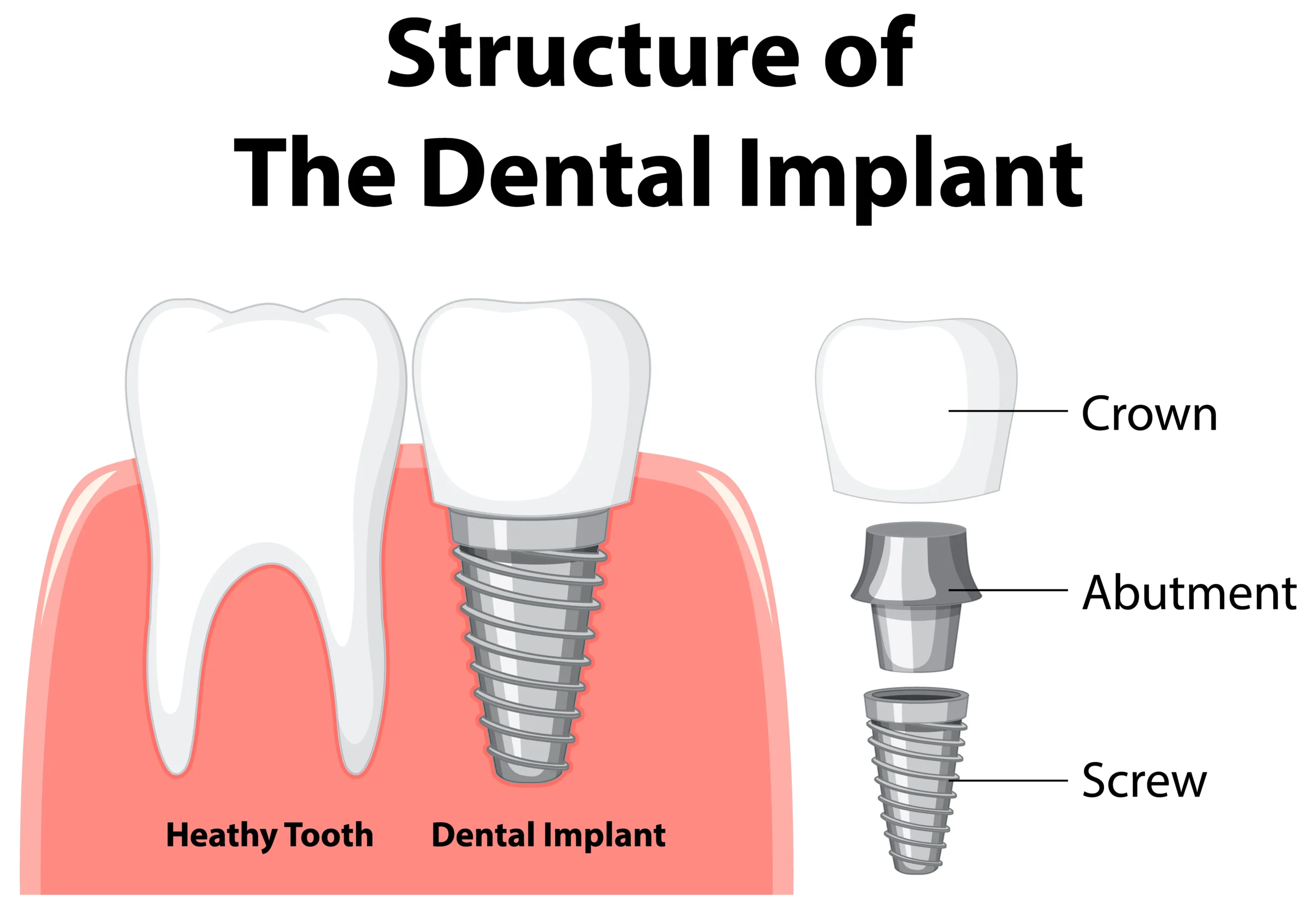
A dental implant is a titanium post that is surgically placed into the jawbone to replace the root of a missing tooth. Once the implant integrates with the bone — a process called osseointegration that typically takes 3–6 months — a custom-made crown is attached on top, restoring the tooth in both function and appearance. The result is a standalone restoration that looks, feels, and performs like a natural tooth — and requires no involvement of neighbouring teeth whatsoever.Key advantages of dental implants:
- Preserves jawbone density — the titanium root stimulates bone just like a natural tooth, preventing the bone resorption that occurs with all other options
- Does not affect adjacent teeth — no healthy tooth structure is cut or crowned
- Longevity — dental implants can last 20–25+ years, often a lifetime, with proper care
- Closest restoration to a natural tooth in feel, function, and appearance
- Easy to clean — brushed and flossed normally, no special maintenance required
What Is a Dental Bridge?
A dental bridge is a fixed restoration that replaces a missing tooth by anchoring an artificial tooth — called a pontic — to the natural teeth on either side of the gap. Those neighbouring teeth are crowned (capped) to serve as abutments that support the bridge. The result is a three-unit restoration (two crowns + one pontic) permanently cemented in place. Unlike a denture, a bridge is not removable — it looks and functions like fixed teeth from day one.Key advantages of dental bridges:
- Lower upfront cost than implants — significantly more accessible for budget-conscious patients
- Faster treatment timeline — completed in 2–3 visits over 1–2 weeks; no waiting for bone integration
- No surgery required — ideal for patients who cannot undergo or prefer to avoid surgical procedures
- Works well when the adjacent teeth already need crowns — the bridge addresses multiple issues at once
- Proven, reliable treatment with decades of clinical track record
Dental Implant vs Bridge: Head-to-Head Comparison
|
Factor |
Dental Implant | Dental Bridge |
| Procedure Type | Surgical (titanium post in jawbone) |
Non-surgical (crowned onto adjacent teeth) |
|
Treatment Timeline |
3–6 months (osseointegration needed) | 1–2 weeks (2–3 visits) |
| Adjacent Teeth | Not touched — fully independent |
Must be crowned / reduced — permanent alteration |
|
Bone Preservation |
Yes — stimulates jawbone like a root | No — bone loss continues under the gap |
| Longevity | 20–25+ years; often lifetime |
10–15 years; then replacement needed |
|
Cleaning |
Brush & floss normally | Special floss threader needed under the pontic |
| Upfront Cost (Mumbai) | ₹25,000 – ₹80,000 per tooth |
₹9,000 – ₹35,000 for 3-unit bridge |
|
Long-Term Cost |
Lower — rarely needs replacement | Higher — periodic replacement adds up over decades |
| Feel & Function | Closest to natural tooth |
Natural-feeling; slight difference in biting |
|
Best For |
Long-term investment; bone preservation; young/middle-aged patients |
Budget priority; faster timeline; adjacent teeth already need crowns; medical contraindication to surgery |
Dental Implant vs Bridge Cost in Mumbai: 2026 Breakdown
Cost is often the deciding factor for patients in Andheri and across Mumbai. Here is a transparent, sourced breakdown of what each option costs in 2026:|
Treatment |
Cost in Mumbai (2026) | What's Included | Lifespan |
| Dental Implant (standard) | ₹25,000 – ₹60,000 | Titanium post + abutment + zirconia crown |
20–25+ years |
|
Dental Implant (premium — Straumann / Nobel) |
₹50,000 – ₹90,000 | International-brand implant + crown | Lifetime with care |
| Dental Implant + Bone Graft (if needed) | ₹35,000 – ₹85,000+ | Implant + bone grafting procedure |
20–25+ years |
|
3-Unit PFM Bridge |
₹9,000 – ₹18,000 | 2 PFM crowns + 1 pontic | 10–12 years |
| 3-Unit Zirconia / All-Ceramic Bridge | ₹20,000 – ₹35,000 | 2 zirconia crowns + 1 pontic |
12–15 years |
|
Implant-Supported Bridge (2+ teeth) |
₹60,000 – ₹1,50,000+ | 2 implants + multi-unit bridge |
Lifetime with care |
The Bone Loss Factor: Why It Matters More Than Most Realise
This is the single most important clinical difference between implants and bridges — and the one most patients are unaware of at the time of decision-making. When a tooth is lost, the jawbone beneath the gap no longer receives the stimulation it needs from a tooth root. Without that stimulation, the bone gradually resorbs — shrinks in height and width. A dental bridge sits above the gum and does nothing to prevent this bone loss. Over 5–10 years, bone resorption can cause the gum tissue under the bridge pontic to recede, creating an unsightly gap, and in some cases, weakening the structure of the bridge itself. A dental implant, by contrast, is placed directly into the jawbone. The titanium post stimulates the bone through chewing forces — just like a natural tooth root — maintaining bone density and volume over the long term. For younger patients especially, this bone preservation benefit makes implants the clinically superior choice for a single missing tooth, even at a higher upfront cost.Dental Implant or Bridge: Which Is Right for You?
Choose a Dental Implant if:
- You want a permanent, lifetime solution with no impact on neighbouring teeth
- You are under 50 and prioritise long-term bone preservation and cost efficiency
- Your adjacent teeth are healthy and you do not want them crowned unnecessarily
- You are willing to complete a 3–6 month treatment timeline for the best outcome
- You have adequate bone volume — or your dentist confirms a bone graft is feasible
Choose a Dental Bridge if:
- Budget is the primary consideration and a lower upfront cost is essential right now
- You need the gap filled quickly — 2–3 appointments over 1–2 weeks
- You are medically unable to undergo surgery (uncontrolled diabetes, blood disorders, active cancer treatment)
- The teeth on either side of the gap already need crowns — the bridge addresses all three at once
- Bone volume is insufficient for an implant and bone grafting is not a viable option
Frequently Asked Questions (FAQs)
Q1. Which is better — a dental implant or a bridge?
Implants are clinically superior for long-term outcomes: they preserve bone, don't affect adjacent teeth, and last a lifetime. Bridges are better when budget or speed is the priority, or when surgery is not an option.Q2. How much does a dental implant cost in Mumbai?
Dental implant cost in Mumbai ranges from ₹25,000 to ₹90,000 per tooth depending on the implant brand, crown material, and whether bone grafting is needed.Q3. How much does a dental bridge cost in Mumbai?
A 3-unit PFM bridge costs ₹9,000–₹18,000; a zirconia bridge costs ₹20,000–₹35,000. Prices vary by material and clinic.Q4. How long does a dental implant last?
Dental implants last 20–25+ years and often a lifetime with proper care and regular dental checkups. Bridges typically last 10–15 years before needing replacement.Q5. Is a dental implant painful?
The procedure is performed under local anaesthesia — you feel pressure but no pain. Post-procedure soreness lasts 2–3 days and is managed with standard pain relief.Q6. Can I get a bridge instead of an implant to save money?
Yes, a bridge is a valid option and costs significantly less upfront. However, factor in long-term costs — bridge replacement and re-crowning of abutment teeth every 10–15 years can exceed the one-time implant cost over a lifetime.Q7. Where can I get a dental implant or bridge in Andheri, Mumbai?
Kasabwala Dental Clinic in Andheri offers both dental implants and crowns & bridges with full cost transparency and X-ray-based treatment planning. Book at kasabwaladental.com/contact-us/.Conclusion
Dental implants and dental bridges are both excellent solutions for a missing tooth — but they serve different needs. Implants are the gold standard: independent, bone-preserving, and built to last a lifetime. Bridges are faster, less invasive, and more affordable upfront — but require alteration of adjacent teeth and don't stop bone loss. For most patients under 55 with healthy adjacent teeth and adequate bone, an implant is the smarter long-term investment. For patients needing a faster, lower-cost solution, a quality zirconia bridge from a trusted dental clinic in Andheri is a proven, reliable option. The right answer depends on your X-rays, your health, and your priorities — and that conversation starts with a consultation. dental implant vs bridge- Tooth First Life — Dental Implant Cost in Mumbai 2026 (March 2026) — Dental implant cost in Mumbai: ₹25,000–₹90,000 per tooth. Implants replace the tooth root, preserve jawbone density, and provide a stable foundation lasting decades. https://toothfirstlife.com/blogs/2026/03/27/dental-implant-cost-in-mumbai-2026/
- Tooth Simplified — Dental Bridges vs Implants in India (May 2026) — Single implant in India starts at ~₹25,000; 3-unit bridge from ~₹9,000. Implants last longer and protect bone; bridges are quicker and require no surgery. https://toothsimplified.com/2026/05/25/dental-bridges-vs-implants-india/
- DentalArch India — Dental Implant Cost India 2026 (June 2026) — Dental implant cost in India: ₹25,000–₹60,000 per tooth depending on implant type, clinic expertise, and additional procedures. https://dentalarchindia.com/dental-implant-cost-india/
- Dentzz Dental — Dental Bridge Cost in India (March 2026) — 3-unit dental bridge in India: ₹9,000–₹75,000 depending on material (PFM to zirconia) and clinic. Bridges bridge the gap using adjacent teeth as abutments. https://www.dentzzdental.com/blog/dental-bridge-cost-in-india-and-pricing-factors/
- Nova Dental Hospital — Dental Implant vs Bridge: Best Choice (June 2026) — A ₹35,000 implant lasting 25+ years may cost far less over a lifetime than a ₹12,000 bridge replaced every 12–15 years. Always discuss total lifetime cost, not just upfront price. https://novadentalhospital.com/dental-implant-vs-bridge-single-missing-tooth-gandhinagar/