Open Instagram on any given day in Mumbai and you will find at least a handful of influencer posts promoting teeth whitening strips, LED whitening kits, activated charcoal powders, and whitening serums — each one promising a dramatically brighter smile in days, for a fraction of the cost of a dental visit. Some of these products are sold by verified brands. Many are sold by unverified sellers with no clinical backing, no regulatory approval, and no accountability for what happens to your enamel after the purchase. So, are these Instagram whitening strips and kits actually safe? The honest answer is: some are, some aren't — and the difference matters significantly for your long-term dental health. Here is what every adult in Andheri and Mumbai needs to know before buying a whitening kit online.
Unsure which whitening option is right for you? Book a Teeth Whitening Consultation at Kasabwala Dental, Andheri — pre-whitening dental assessment included.
How Do Teeth Whitening Strips and Kits Actually Work?
Most whitening strips and kits — whether purchased from a pharmacy or ordered via an Instagram DM — work through the same basic mechanism: peroxide-based bleaching agents, usually hydrogen peroxide or carbamide peroxide, penetrate the enamel surface and break apart the chemical compounds responsible for tooth discolouration. The concentration of peroxide in the product determines both its effectiveness and its safety margin. Regulated over-the-counter (OTC) whitening products sold in India and internationally are permitted to contain up to 0.1% hydrogen peroxide for consumer use. Professional in-clinic whitening systems used by dentists operate at concentrations of 25–40% — applied under controlled conditions with gum protection and clinical supervision. The difference between these concentrations is not just about speed of results. It is about the margin between safe use and enamel damage. Many products promoted on Instagram by influencers in India are not regulated by the Central Drugs Standard Control Organisation (CDSCO) or tested for safety. Some contain concentrations of hydrogen peroxide well above legal OTC limits. Others contain abrasive ingredients — including activated charcoal and baking soda blends — that can physically erode enamel with repeated use. The attractive before-and-after photographs do not tell you what those products are doing to the inner layers of the tooth. Want safe, visible whitening results? Book Professional Teeth Whitening at Kasabwala Dental, Andheri — clinician-grade treatment with complete gum protection.The Real Risks of Unregulated Instagram Whitening Products
-
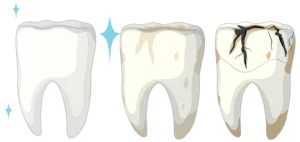
Enamel Erosion — Irreversible Damage
-
Severe Tooth Sensitivity
-
Gum Burns and Chemical Irritation
-
Uneven Whitening and Mismatched Restorations
-
No Regulation, No Accountability
Who Should Absolutely Avoid OTC and Instagram Whitening Kits?
Even legitimate, well-formulated OTC whitening strips are not suitable for everyone. The following groups should avoid them entirely and consult a dentist before any whitening attempt:- People with existing tooth sensitivity — strips will worsen it, sometimes significantly
- Anyone with active gum disease, gingivitis, or gum recession — peroxide on inflamed tissue causes chemical burns
- Patients with crowns, veneers, or composite bonding on front teeth — uneven whitening and shade mismatch will result
- Those with cavities or cracked teeth — peroxide penetrating through a cavity or crack can reach the pulp and cause severe pain
- Pregnant or breastfeeding women — clinical data on whitening agent safety for this group is insufficient; most dental professionals advise against it
- Anyone under 18 — tooth enamel and pulp are still maturing and are more sensitive to chemical bleaching agents
What Actually Works and Is Safe for Teeth Whitening?
The safest and most effective approach to teeth whitening depends on what you are trying to achieve and the current state of your oral health. Here is an honest breakdown from a clinical perspective:Professional In-Clinic Whitening — Safest and Most Effective
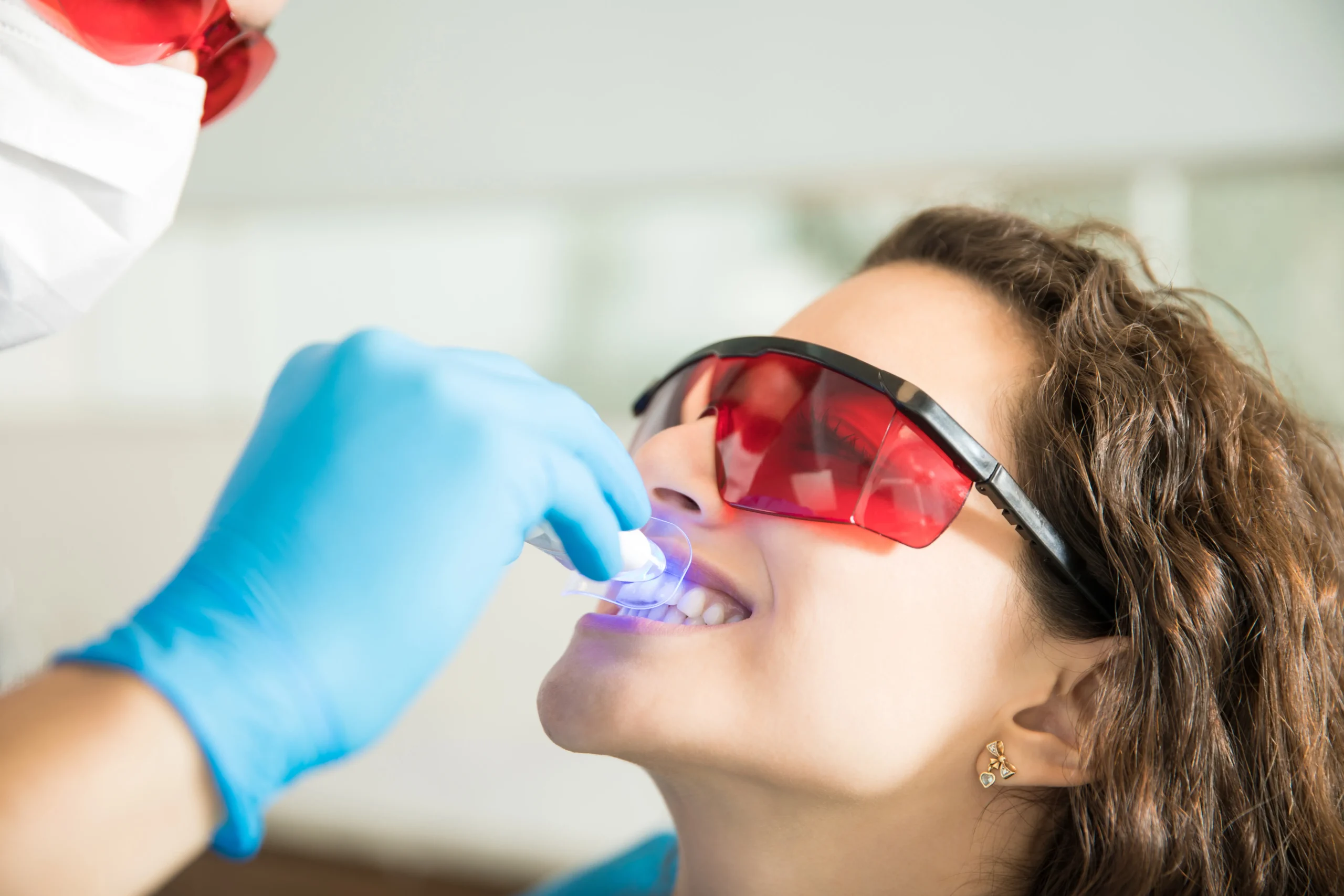
In-clinic whitening at a dental clinic in Andheri uses high-concentration peroxide (25–40%) applied under strict clinical conditions — with custom gum shields, controlled exposure times, and a full pre-treatment dental assessment. Results are dramatic, consistent, and achieved in a single 45–90 minute session. The cost in Mumbai ranges from ₹5,000 to ₹20,000, which sounds steep until you compare it with the cost of treating enamel erosion, sensitivity, or a chemical gum burn caused by an unregulated kit.Dentist-Dispensed Take-Home Kits — Safe and Convenient
Custom take-home whitening kits from a dentist — fitted trays with a regulated peroxide gel — are the gold standard for at-home whitening. The tray is fabricated from a mould of your specific teeth, ensuring gel stays on enamel and off gum tissue. The peroxide concentration is clinically appropriate for your tooth sensitivity level. These cost ₹3,000–₹6,000 in Mumbai and deliver results over 2–4 weeks of nightly use. This is fundamentally different from a generic Instagram tray kit — the customisation is everything.OTC Strips from a Pharmacy — Acceptable for Mild Staining
Pharmacy-purchased whitening strips from established, regulated brands — available at most pharmacies in Mumbai — are a reasonable starting point for mild surface staining in adults with healthy teeth and no restorations. They contain 0.1% or lower hydrogen peroxide concentrations within legal OTC limits, come with clear usage instructions, and are manufactured to consistent quality standards. They are slower and less dramatic than professional whitening, but they are safe when used as directed and not overused.Instagram Kits — Approach with Caution
Not all Instagram whitening products are dangerous — some are simply overpriced and underperforming versions of OTC pharmacy products with better packaging and influencer endorsements. But without regulatory transparency, ingredient disclosure, and clinical testing data, you have no reliable way of knowing which category a given product falls into before you apply it to your teeth. The safest rule: if you cannot verify the peroxide concentration, the manufacturer's regulatory status, and the absence of abrasive ingredients in the formula, do not use it on your enamel.Whitening Options Compared: Safety at a Glance
|
Whitening Option |
Peroxide Concentration | Safety Level | Results | Cost (Mumbai) |
| Instagram / Unverified Online Kits | Unknown / Often Unlisted | Variable — unregulated | Variable |
₹500 – ₹3,000 |
|
OTC Pharmacy Strips (regulated brands) |
Up to 0.1% HP | Moderate — safe when used as directed | Mild improvement | ₹300 – ₹2,000 |
| Dentist-Dispensed Custom Take-Home Kit | 3–10% carbamide peroxide | High — clinically supervised | Noticeable over 2–4 weeks |
₹3,000 – ₹6,000 |
|
Professional In-Clinic Whitening |
25–40% HP (supervised) | Highest — full gum protection, pre-assessment | Dramatic in 1 session |
₹5,000 – ₹20,000 |
Frequently Asked Questions (FAQs)
Q1. Are Instagram teeth whitening kits safe?
Many are unregulated and do not disclose peroxide concentrations or ingredient lists. While some are harmless but ineffective, others contain concentrations above legal OTC limits or abrasive ingredients that can damage enamel. Always verify the product's regulatory status before use.Q2. Do whitening strips damage enamel?
Regulated whitening strips used as directed are generally safe for enamel. However, overuse, excessive peroxide concentrations, or abrasive ingredients can cause enamel erosion over time — an irreversible process. Avoid using any product daily or beyond the recommended duration.Q3. What are the side effects of whitening strips?
The most common side effects are temporary tooth sensitivity to hot and cold, and gum irritation where the strip contacts soft tissue. More serious effects — chemical burns, prolonged sensitivity, uneven whitening — are associated with misuse or unregulated products.Q4. Can I use whitening strips if I have crowns or fillings?
No — not without a dental consultation first. Whitening strips only work on natural enamel. Crowns, veneers, and composite fillings will not whiten, creating a visible mismatch between your natural teeth and restorations.Q5. What is the safest way to whiten teeth at home?
Dentist-dispensed custom tray whitening kits are the safest at-home option — precisely fitted to your teeth, with clinically appropriate gel concentrations. OTC strips from regulated pharmacy brands are a reasonable alternative for mild staining in adults with healthy teeth.Q6. Is professional teeth whitening worth the cost compared to Instagram kits?
Yes, for most patients. Professional whitening delivers faster, more consistent, and clinically safe results — with a pre-treatment assessment that identifies whether whitening is even appropriate for your current oral health. The cost of treating sensitivity or enamel damage caused by unregulated kits often exceeds the cost of professional whitening.Q7. Where can I get safe professional teeth whitening in Andheri, Mumbai?
Kasabwala Dental Clinic in Andheri offers professional in-clinic whitening and dentist-dispensed take-home kits — both preceded by a dental health assessment to ensure whitening is safe and effective for you. Book at kasabwaladental.com/contact-us/.Conclusion
Instagram whitening kits are not going away — and not every one of them is dangerous. But the absence of regulatory oversight, the lack of ingredient transparency, and the financial incentive for influencers to promote without clinical accountability creates a genuinely risky environment for your enamel. Tooth enamel cannot regenerate. A professional whitening session at a dental clinic in Andheri is not just more effective — it is the only option that comes with a clinical assessment of whether whitening is appropriate for your teeth right now, a customised approach that protects your gums, and a dentist who is accountable for the outcome. Before you buy your next whitening kit from an Instagram ad, ask yourself whether the influencer promoting it has ever seen your teeth — or whether they even know what carbamide peroxide does to dentine.References & Citations
- Acibadem International Medical Board — Whitening Strips: What Patients Need to Know (July 2026) — https://acibademinternational.com/health-library/whitening-strips-what-patients-need-to-know/
- Toothopia Dental — Are Whitening Strips Bad for Your Teeth? (October 2026) — https://toothopiadental.com/are-whitening-strips-bad-for-your-teeth/
- Dental Wellness London — Whitening Strips: Side Effects, Risks & Best Practices (August 2026) — https://www.dentalwellnesslondon.co.uk/blog/are-teeth-whitening-strips-safe-side-effects-risks-best-practices
- Crescent Smiles — Are Whitening Strips Bad for Your Teeth? — https://www.crescentsmiles.com/are-whitening-strips-bad-for-your-teeth/
- Smile Boutique Group — Are Whitening Strips Safe? (May 2026) — https://www.smileboutiquegroup.com/blog/are-teeth-whitening-strips-safe/
- Medical News Today — Whitening Strips: Do They Work? — https://www.medicalnewstoday.com/articles/whitening-strips